
Quality is kept
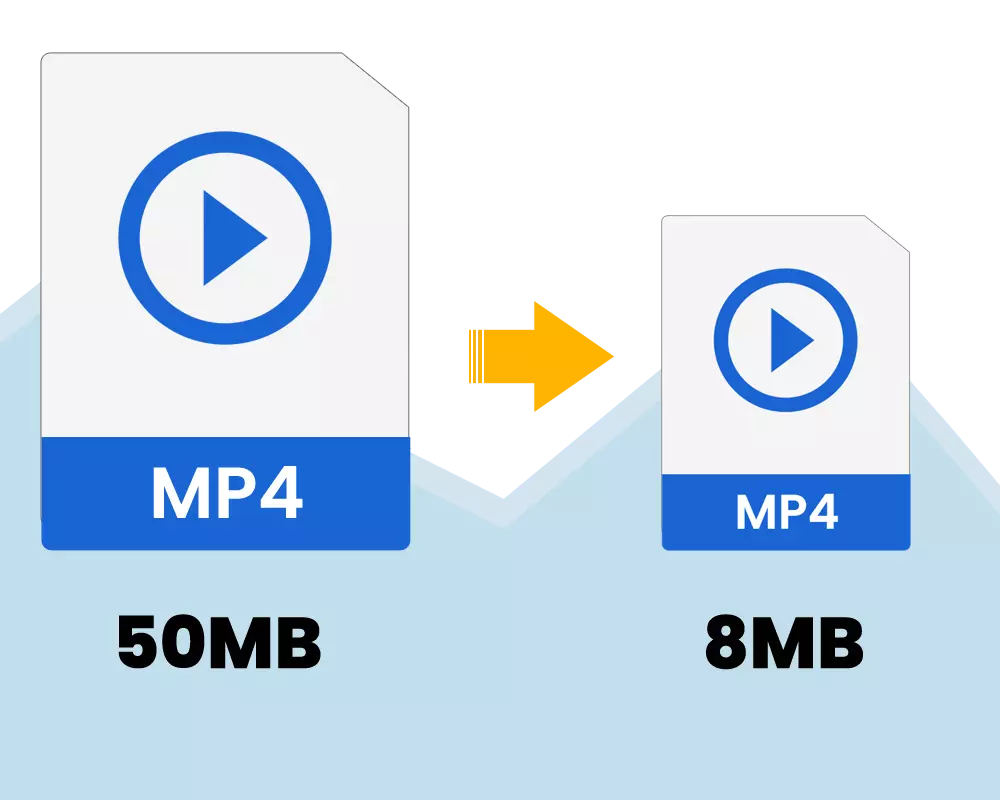
The video is re-encoded with a modern H.264 encoder tuned for visual quality, so the result looks like the original on a device screen even when the file is a third of the size.
Make your videos up to 90 % smaller while keeping them sharp. Drop up to 10 files, choose a compression level, optionally remove the audio or reduce the width, and download the MP4s. Everything happens on your own device.
Compression level
A video compressor built for one thing: smaller files that still look great.
The video is re-encoded with a modern H.264 encoder tuned for visual quality, so the result looks like the original on a device screen even when the file is a third of the size.
Pick a smaller width and the height follows automatically. A 4K clip scaled to 1280 px is a fraction of the size and still perfect for WhatsApp, e-mail or a website.
Three compression levels, from a light touch that keeps the resolution to the smallest-file mode for chat apps. Most phone videos lose 60–90 % of their size.
Choose the level, remove the audio when the sound is not needed, reduce the width: three simple options that cover every case, with the results shown before you download.
No account, no settings to study. Drop the files, click the button, download the MP4s one by one or as a .zip. It works the same on Windows, Mac, Linux, Android and iPhone.
Your videos never leave your device: the compressor runs inside your browser. Nothing is uploaded, and you can even go offline once the page has loaded.
Thousands of people compress videos here every day. A few of the ways they use it.
YouTubers, streamers and podcasters trim gigabytes off raw exports before uploading, keep more footage on their laptops and send preview cuts to clients and editors over e-mail or WhatsApp without waiting for a cloud link.
Newsrooms and production teams shrink interview footage and B-roll before archiving it, pass clips between desks in seconds, and meet the file-size limits of CMSs, ad networks and broadcasters without a render farm.
Reels, Stories, TikToks and LinkedIn posts have their own size and resolution limits. Compressing and resizing in one pass means every clip uploads first time, plays smoothly and looks the same on every platform.
Product demos, testimonials and event recordings are shared with agencies, sales teams and customers all day long. Smaller files mean faster downloads, lighter e-mails and landing pages that still pass a PageSpeed test.
Make family videos, holiday clips and personal recordings smaller before sharing them with friends. Compress videos for WhatsApp, e-mail, social media posts or profile updates, and free up space on your phone without installing an app.
Students compress video assignments, school projects and presentations before sharing them. Teachers and professors make recorded lessons and lectures smaller, so they're easier to upload, download and share with the class.
Three steps, less than a minute of your attention.
Drag up to 10 video files into the box at the top of the page or click it to browse your computer or phone. MP4, MOV, AVI, MKV, WebM, WMV and most other formats are accepted, each up to 1 GB. A thumbnail, the size and the length of every video appear in the list, and you can remove a file or add more before starting the compression.
Choose a compression level: High quality keeps the resolution and only re-encodes more efficiently, Balanced caps the video at 1080p for the best size-quality ratio, Smallest file goes down to 720p for chat apps and e-mail. Tick "Remove the audio track" if the sound is not needed, and reduce the width if the video is larger than it has to be.
Click the button. The compressor loads once and then works through the list on your own device; each video shows a progress bar, the percentage done and the time left. When a file is ready, its new size and the saving appear next to the original. Download the videos one by one, or click "Download all" to get a single .zip with all the videos.
Big video files get in the way. E-mail providers stop attachments at about 25 MB, messaging apps and chat platforms set their own ceilings, and a hefty clip can take minutes to upload to a social network, or fail halfway. Raw footage also fills phone storage and cloud backups faster than anything else. A compressed video sends in seconds, fits every platform's limit and frees space, while keeping everything that matters on screen.
Gmail, Outlook, Yahoo and most email providers refuse attachments above 20–25 MB. Choose Balanced, reduce the width to 1280 px for long clips, and a two-minute phone video fits comfortably under the limit.
WhatsApp compresses heavily on its own, which makes videos look bad. Shrink the file here first with Smallest file and a 640 or 854 px width: it sends at once and looks better than the app's own result.
Free Discord accounts can only attach files up to about 20 MB (25 MB on some servers). The Balanced compression level at 854 px width can generally keep a one-minute clip under the limit with the audio intact.
Instagram, TikTok and LinkedIn re-encode everything they receive. Upload a clean, already small 1080p file and the platform has less to damage: faster upload, fewer failures and a better video quality result.
Yes, completely. There is no account to create, no limit on the number of videos and no paid plan hiding behind the button. A single ad on the page keeps the service running.
Share the page with a friend or on your social networks: the icons are in the bar at the top. A link from a blog or a forum helps even more. That is all we ask.
Yes. Drop up to 10 videos at once, up to 1 GB each. They are compressed one after the other with the same options, and you can download them individually or all together as a .zip file.
Compression always discards something, but the High quality and Balanced levels are tuned so that the difference is invisible on a phone, a laptop or a TV. Only the Smallest file mode trades a little sharpness for the lowest size.
Yes, and also AVI, MKV, WebM, WMV, FLV, MPEG, 3GP, TS and most other formats. Whatever goes in, the result is an MP4 with H.264 video and AAC audio, which plays everywhere.
Yes. Choose Smallest file and reduce the width to 854 or 640 px: a typical one-minute phone clip ends up well under 64–100 MB in file size, sends immediately and looks better than what WhatsApp produces on its own, that sometimes has bad quality.
On the first visit the compressor itself is downloaded (about 30 MB) and then cached. After that, a one-minute 1080p video takes one to three minutes on a laptop; reducing the width makes it faster. A progress bar and the time left are shown for every file.
No. The compressor runs inside your browser, on your own computer or phone. The video never travels over the internet, we never see it, and there is nothing to delete afterwards. You can even disconnect once the page has loaded.
Yes. Open the page in Safari or Chrome, tap the box and pick the video from your Photos. Videos of a few minutes work fine; very long 4K recordings may exceed the phone's memory, in which case reduce the width or use a computer.
Never. The video you download is yours as it was, only smaller: no logo, no text overlay, no changes to the sound, the length or the file name beyond the "-smaller" suffix.
No. Everything works in a modern browser such as Chrome, Firefox, Edge or Safari, on Windows, Mac, Linux, Android and iOS. There is no extension, no app and no plug-in to install.
Almost always. A video that was already well compressed, for example one exported from an editor at a low bitrate, may shrink only a little at the same resolution: in that case use Balanced or Smallest file, or reduce the width, and the file will drop substantially.
Yes, and on Linux and Chromebooks too. The compressor does not depend on the operating system, only on the browser, so the same page works on every computer without any setup.